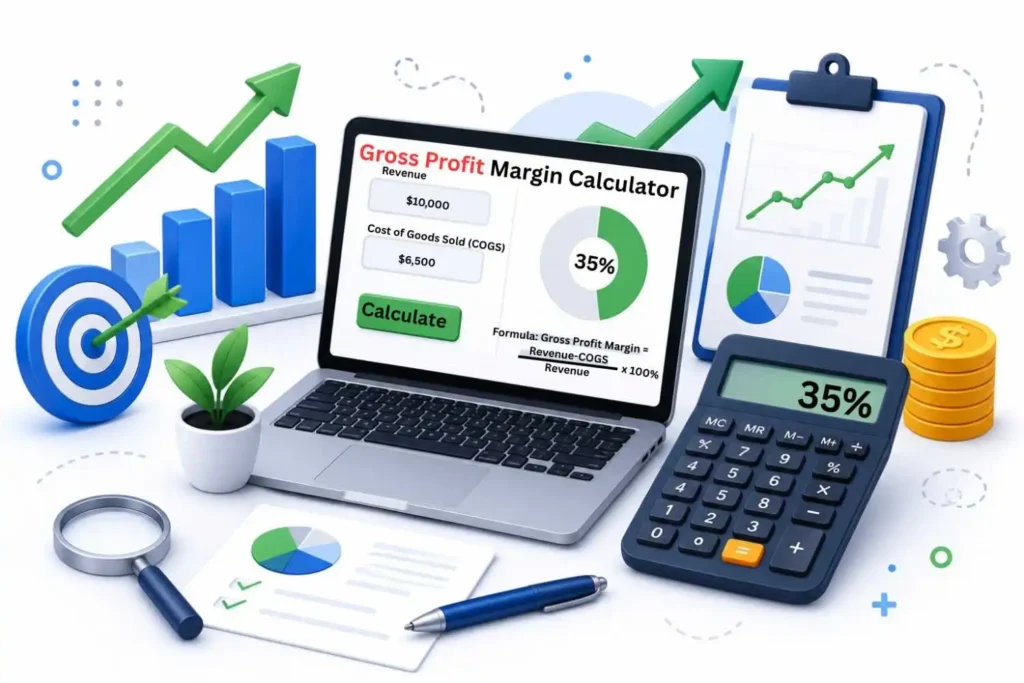
The right selling price is one of the most crucial choices that any business makes. When it is too high, you will lose customers, and when it is too low, your profit will be less. It is at this point that you need to know your profit margin. It assists you in knowing the amount of money you will make on each sale after bearing your expenses.
With the profit margin calculator formula, businesses can make more intelligent decisions on pricing using clear numbers as opposed to making assumptions. You may have a small shop, an online store, or even provide a service, but understanding how to compute and use profit margin will help you remain competitive and still have a healthy profit in the long run.
This blog will define profit margin, deconstruct the formula, discuss the importance of profit margin in determining the correct selling price, and take you through the step-by-step process of how to use profit margin and also point out the pitfalls to avoid.
What is Profit Margin?
Profit margin is a financial ratio that indicates the level of profit that a business makes out of its total revenue. It is in percentage form and it assists in determining your level of efficiency in pricing and cost management. Simply stated, it informs you of the amount of money you retain after a sale after expenses. The higher the profit margin, the more profitable it is and the lower the profit margin, the higher the costs or the price. Profit margin is a crucial concept that one should understand in making intelligent business choices.
Profit Margin Calculator Formula Explained
Profit Margin = (Net Profit ÷ Revenue) × 100
Net Profit = Selling Price − Cost Price
The profit margin calculator formula is used to enable companies to easily ascertain the amount of profit they are earning per sale in percentage terms. It is a straightforward yet effective method to assess price performance and business performance.
Why Profit Margin Matters in Setting Selling Price
The profit margin is an important element in determining the appropriate selling price of any product or service. It will make sure that a business not only recovers the costs but also gains a good profit on each sale. Unless a business knows the profit margins, it might end up pricing its goods and services below their true value and risk losing its clientele or overprice and lose clients.
A calculated margin also assists in staying competitive and profitable. It also enables businesses to make projections on growth, control costs, and remain afloat in the long term. Through the profit margin analysis, business owners can be able to make a sound decision about pricing rather than basing it on guesses, which gives them greater control over finances and long-term success.
Step-by-Step: Using Profit Margin Calculator Formula to Set Selling Price
With a consistent step-by-step process that is guided by profit margin, setting the right selling price is much easier. It makes you comprehend costs, select the correct margin, and come up with a price that will make you profitable and at the same time competitive in the market.
Step 1: Figure Out Total Cost
The first step is to calculate the total cost of your product or service, including the cost of raw materials and production, labor and other costs. The exact cost is a necessity, as you know; it is the foundation of your calculation of pricing and you cannot sell at a loss.
Step 2: Choose Desired Profit Margin.
Determine a percentage of the amount of profit you want to make per sale. This depends on your business goals, market demand, and competition. A realistic margin will guarantee you stable profits without setting your price too high to attract customers.
Step 3: Apply the Formula
Use the profit margin formula to calculate the proper selling price. Using the equation, you can easily estimate how much to charge to reach a target profit level accurately and consistently by entering your cost and desired margin in the equation.
Step 4: Determine Final Selling Price
Upon calculation, analyze the very last selling fee and examine it with marketplace rates. Ensure that it’s miles aggressive without compromising your income objectives. This will assist in striking a balance between customer affordability and your profitability in business.
With these steps, the businesses are able to establish the right selling prices with profit. It eliminates guesswork and makes all products strategically priced. This strategy assists in sustaining healthy margins and enhancing decision-making and aiding business development over time in a competitive environment.
Common Mistakes to Avoid
The issue of pricing is a challenge that many businesses face due to minor yet expensive errors in calculating profits. These mistakes should be avoided because it is essential to have proper pricing and the same profitability. Knowing the common pitfalls that people fall into can enable you to make more sound financial choices and keep your business out of losses.
- Mistake 1: Confusing Profit Margin with Markup
- Mistake 2: Ignoring Hidden Costs
- Mistake 3: Using Incorrect Formula
- Mistake 4: Setting Unrealistic Margins
These are some of the typical errors that can be avoided to ensure proper pricing and improved financial management. Understanding and rectifying these mistakes can help businesses increase profitability, remain competitive, and make more assured pricing decisions that help businesses grow and stabilize over the long run.
Conclusion
Finally, pricing is a key aspect of a successful and profitable business, and it is necessary to understand how it functions. Well understanding the costs, margins, and selling price will help to ensure all products or services produce the appropriate amount of profit. A systematic method of pricing can help businesses to prevent losses and make more-informed financial decisions. It also enables more planning, better cash flow, and stability in the long run in a competitive market.
The correct use of tools and calculations simplifies the whole process and is more precise. The profit margin calculator formula is important in making these calculations easier and enabling business owners to be confident in setting strong and fair prices. In general, the ability to control this concept will result in greater financial control and the business’s future growth.
FAQs
Q1. What is the profit margin in simple words?
Profit margin is a percentage of profit that a business gets after taking into consideration all expenses. It is a measure of the profitability of sales by a business.
Q2. How is the profit margin calculated?
The profit margin can be calculated by using the following formula: (Net Profit ÷ Revenue) × 100. It assists in the transformation of profit in percentage to facilitate easy understanding and comparison.
Q3. Why is profit margin important for pricing?
It assists companies in determining the appropriate selling price by making sure that all expenses are met and at the same time, it aims at making a good profit to sustain long-term growth and stability.
Q4. What is the difference between profit margin and markup?
Profit margin is revenue-based, whereas markup is cost-price-based. The two are applied to price, though they provide different percentage values.
Q5. Can I use a calculator for profit margin instead of manual calculation?
Yes, an online application, such as a profit margin calculator formula, can assist in making the calculations quicker and more precise and minimize errors of human mistakes in pricing decisions.